
Why “No Incidents” Is Not a Cybersecurity Strategy
Key Takeaways
"One of the most reassuring statements executives make about cybersecurity is also one of the most misleading:"
One of the most reassuring statements executives make about cybersecurity is also one of the most misleading:
“We haven’t had any incidents.”
On the surface, it sounds responsible. Stable. Controlled. Safe.
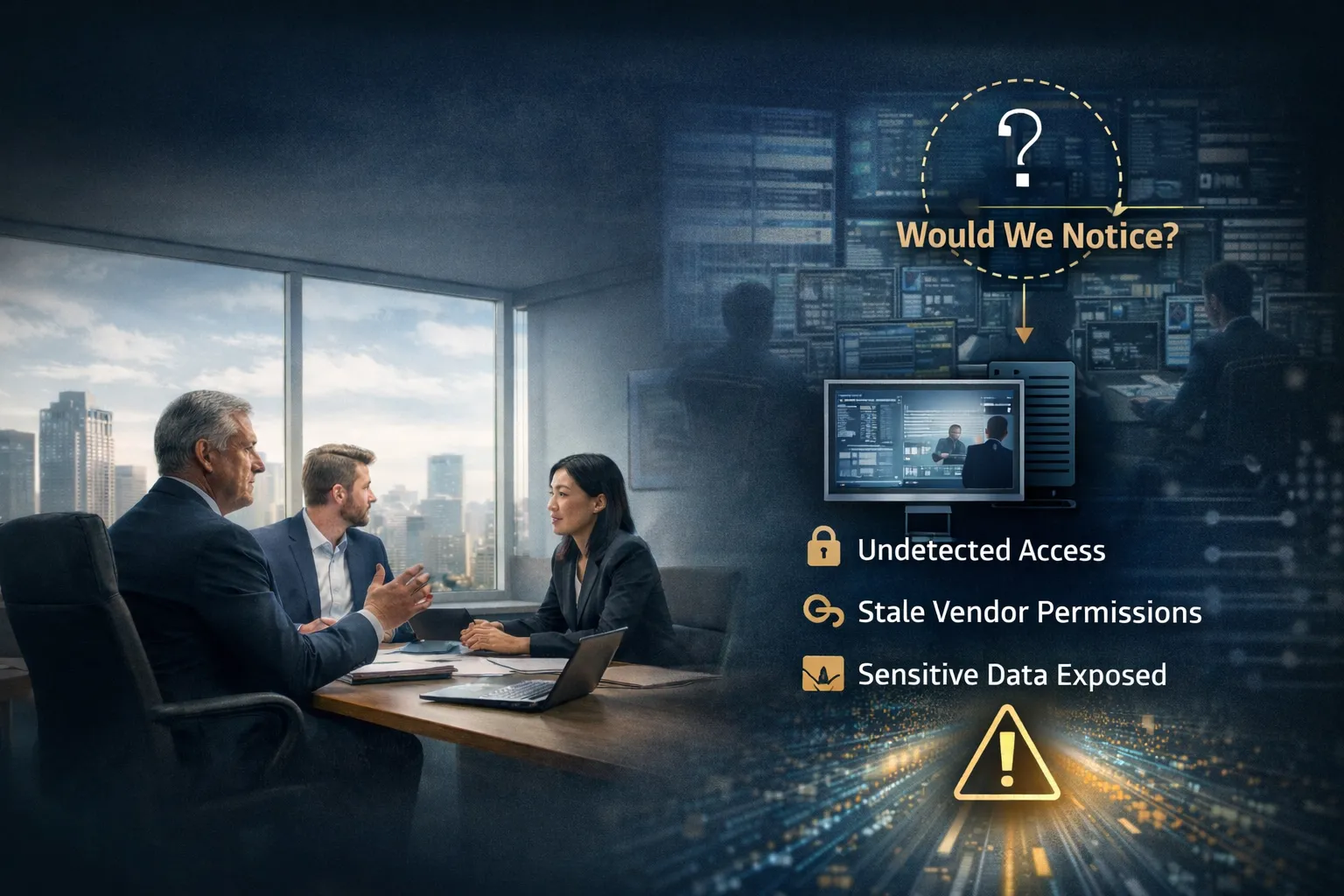
But in practice, “no incidents” rarely means “low risk.” More often, it means limited visibility.
The Illusion of Safety
In regulated financial services firms, cyber risk doesn’t usually announce itself with alarms and headlines. It shows up quietly — in small gaps between systems, vendors, and workflows.
Most firms don’t discover issues because a security tool detected an attacker. They discover them accidentally:
- An investor document lands in the wrong inbox
- A former employee still has access months later
- A vendor retained permissions longer than intended
- A file-sharing link is broader than anyone realized
None of these events feel like “incidents” in the moment. But each one represents loss of control, not just inconvenience.
When firms say nothing has happened, what they often mean is:
“Nothing has been visible enough to force a response.”
That’s a very different claim.
Why Detection Matters More Than History
Cybersecurity maturity isn’t measured by a clean track record. It’s measured by how quickly a firm would know if something went wrong.
Executives should be able to answer questions like:
- How would we detect unauthorized access to sensitive data?
- Which alerts would rise to human attention — and which would not?
- Who decides whether something is material?
- How quickly could leadership be briefed with facts instead of speculation?
If those answers are unclear, then “no incidents” is not reassurance — it’s uncertainty.
Risk doesn’t disappear when it’s undetected. It compounds.
Silent Failures Are the Most Expensive
The most damaging cyber events are rarely dramatic breaches. They are slow, quiet failures that persist unnoticed.
Consider vendor access as an example.
Financial firms depend on administrators, platforms, consultants, and service providers — many of whom require elevated access. Over time, permissions accumulate. Accounts linger. Exceptions become normal.
Nothing breaks. Nothing alerts. Nothing looks wrong.
Until an investor asks a question. Or a regulator requests evidence. Or a routine change exposes something that should have been controlled months earlier.
At that point, the issue isn’t technical. It’s governance.
The Question Executives Should Be Asking
Rather than asking, “Have we had any incidents?” A more useful question is:
“Where would we be least likely to notice a problem?”
That question forces clarity around:
- Visibility gaps
- Over-trusted workflows
- Informal processes
- Vendor and third-party exposure
It shifts the conversation from reassurance to readiness.
Firms that can answer this honestly — without defensiveness — are usually far more resilient than those with a spotless incident log.
Why “Nothing Happened” Creates False Confidence
The danger of relying on incident history is psychological.
When nothing bad appears to have happened, firms naturally deprioritize discipline:
- Reviews get delayed
- Documentation slips
- Exceptions linger longer than intended
Confidence grows — but it’s confidence built on absence, not evidence.
Regulators and investors are increasingly aware of this dynamic. They don’t ask about incidents to hear “no.” They ask to understand how firms know.
Readiness Over Reassurance
Strong firms don’t aim for zero incidents. They aim for fast awareness and controlled response.
They assume that:
- Minor issues will occur
- Controls will occasionally fail
- Humans will make mistakes
What differentiates them is how quickly those issues are surfaced, contained, and explained.
Preparedness creates calm. Visibility creates confidence. Reassurance without evidence creates risk.
A Better Definition of Security
Security is not the absence of bad events. It’s the presence of clarity.
When executives can say:
- “We know where our sensitive data flows.”
- “We know who has access and why.”
- “We know how we’d respond — and who would lead.”
Then confidence is justified.
Until then, “no incidents” isn’t a strategy. It’s a pause — one that eventually ends.
Final Thought
Cyber risk doesn’t punish optimism. It punishes assumptions.
The firms that stay ahead aren’t the ones that say nothing has happened. They’re the ones that assume something eventually will — and prepare accordingly.