
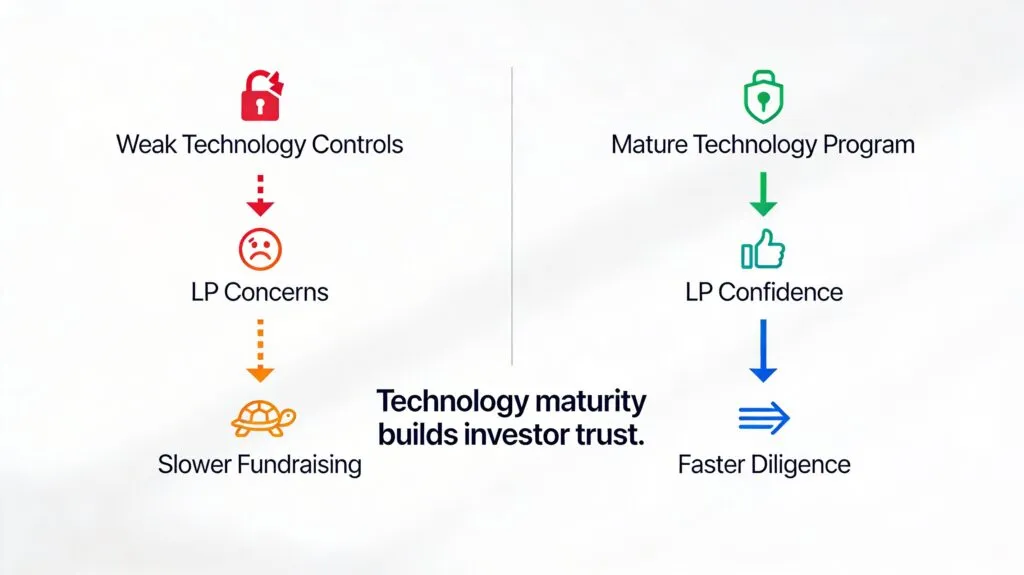
Why Technology Due Diligence Is Now a Fundraising Issue
Key Takeaways
Raising capital today isn’t just about performance.
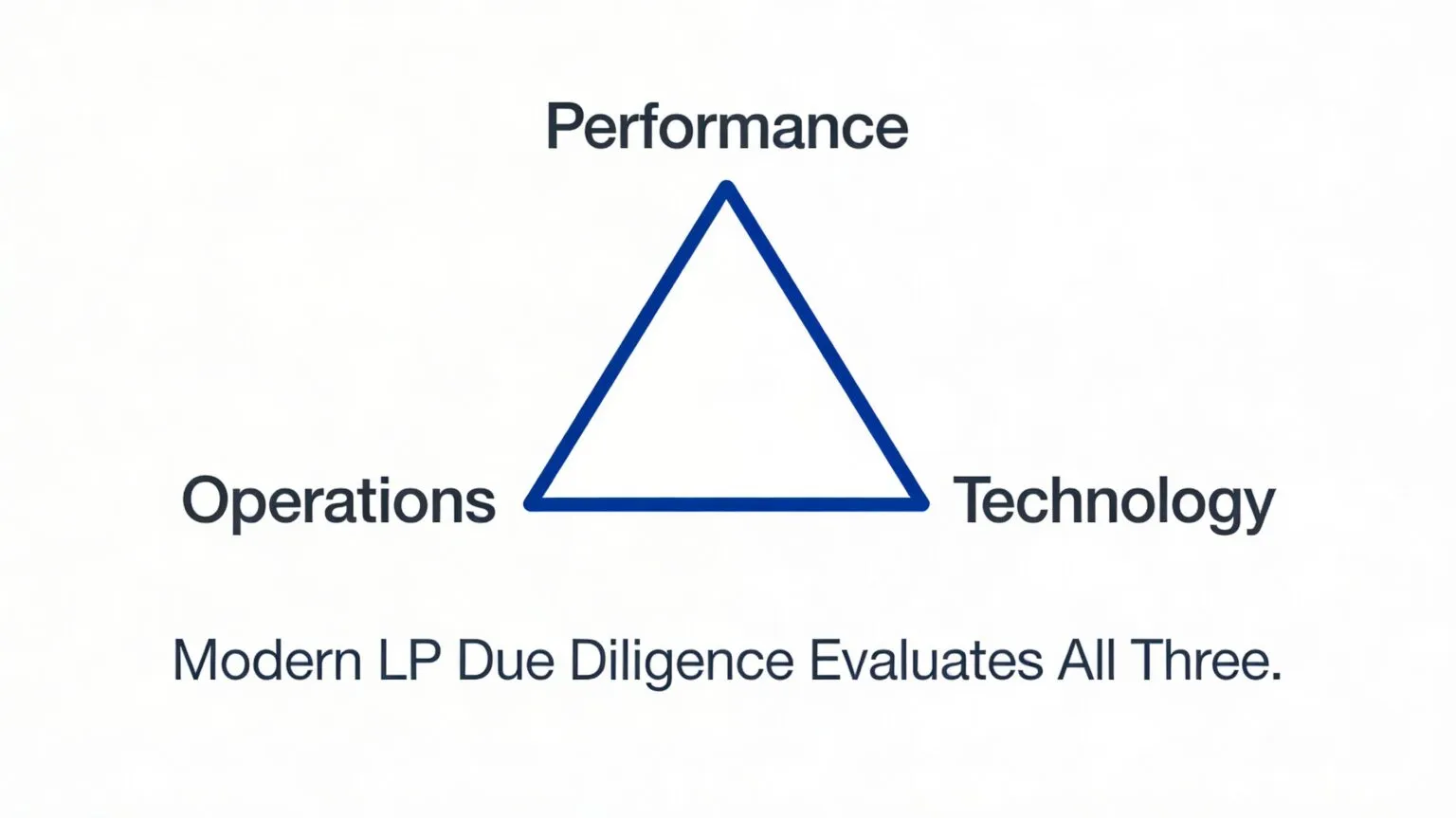
Raising capital today isn’t just about performance.
It’s also about operational credibility — and increasingly, that includes technology and cybersecurity.
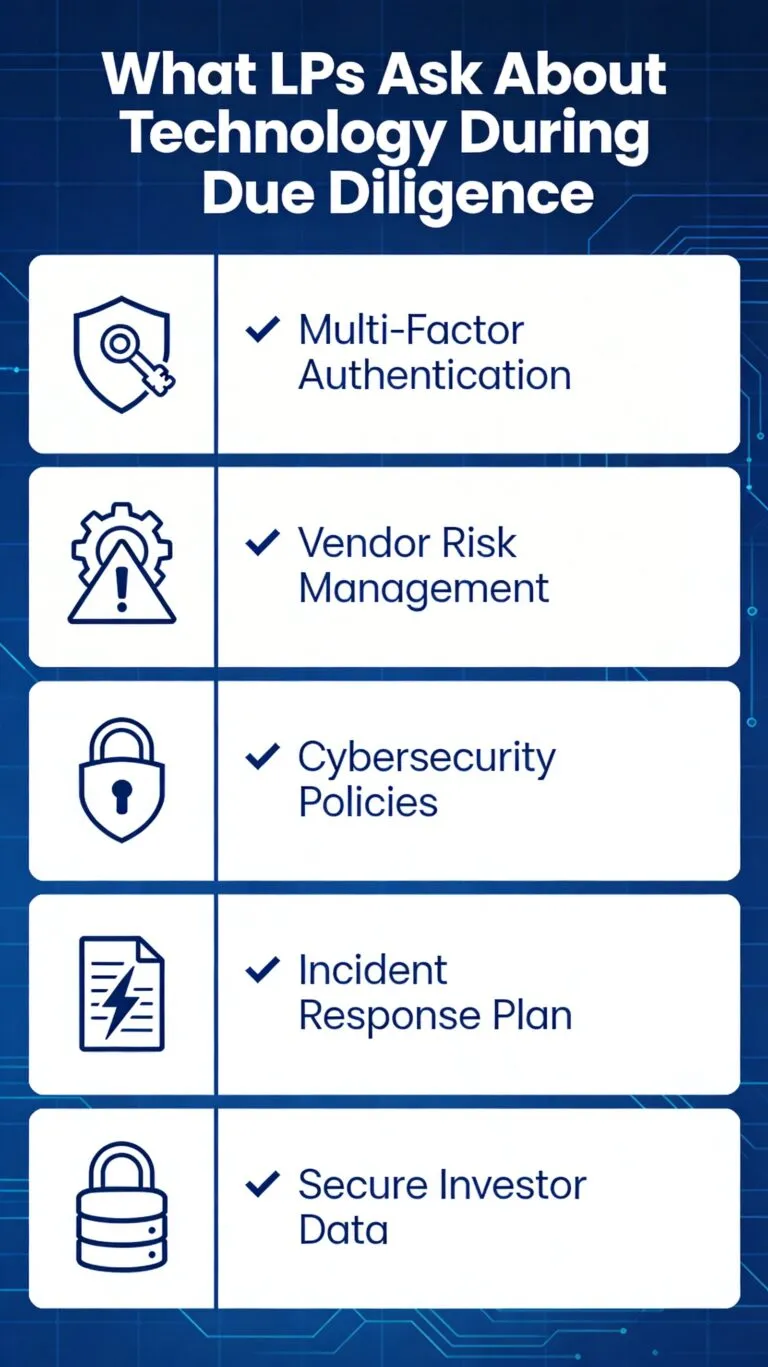
During operational due diligence, LPs are no longer just asking about your administrator and valuation policies. They’re asking questions like:
- How do you protect investor data?
- Do employees use MFA and secure devices?
- How do you manage vendor risk?
- What happens if you have a cyber incident?
These questions matter because a cybersecurity incident isn’t just a technical problem — it’s an investor confidence problem.
A breach can expose LP information, disrupt operations, and create reputational damage that’s hard to recover from.
The good news is that LPs aren’t expecting every firm to build a massive internal IT team. What they want to see is maturity and intentionality:
- Documented policies
- Secure systems and access controls
- Vendor oversight
- An incident response plan
Firms that treat technology as part of their operational infrastructure — not an afterthought — tend to move through diligence faster and with more confidence from investors.
In other words:
Technology maturity has quietly become part of the fundraising story.
If you can demonstrate control over your systems and data, you’re not just reducing risk — you’re strengthening trust with LPs.
Frequently Asked Questions
What technology and cybersecurity questions do LPs ask during operational due diligence?
LPs conducting operational due diligence now routinely ask how a firm protects investor data, whether employees use multi-factor authentication and secure devices, how vendor risk is managed, and what the firm’s incident response plan looks like. These questions reflect a broader shift in which operational credibility — not just performance — influences capital allocation decisions. Firms without documented policies or access controls often face longer diligence timelines or increased investor skepticism.
Why does a cybersecurity breach become a fundraising problem for a hedge fund or RIA?
A cybersecurity incident at a fund or RIA directly exposes LP data, disrupts operations, and creates reputational damage that erodes investor confidence. Unlike purely technical failures, a breach signals operational immaturity to current and prospective LPs. The reputational harm can persist well beyond the technical recovery, complicating future capital raises.
What level of cybersecurity maturity do LPs actually expect from emerging managers?
LPs are not expecting emerging managers to build large internal IT teams. What LP operational due diligence teams look for is evidence of intentionality: documented security policies, enforced access controls such as MFA, vendor oversight processes, and a written incident response plan. Demonstrating that technology governance is treated as part of core operational infrastructure — rather than an afterthought — is what typically satisfies diligence reviewers.
How do documented security policies affect how quickly a fund moves through LP due diligence?
Funds with documented security policies, access controls, and incident response plans tend to move through operational due diligence faster and with stronger LP confidence than firms that cannot produce these materials on request. The absence of documentation signals that technology risk has not been formally managed, which can trigger extended diligence reviews or requests for remediation before commitment. Having policies in place before the diligence process begins reduces friction at a critical point in the capital raise.
Should a private equity or hedge fund have a formal vendor risk management program before going to market?
Having a formal vendor risk management program in place before approaching LPs is advisable, because vendor oversight is now a standard component of LP operational due diligence questionnaires. Firms should be able to demonstrate how third-party service providers — including administrators, prime brokers, and software vendors — are evaluated and monitored for security risk. A documented vendor oversight process signals operational maturity and reduces the likelihood that LP diligence will surface a gap at a sensitive stage of fundraising.
What does an incident response plan need to include for it to satisfy LP due diligence reviewers?
An incident response plan reviewed during LP due diligence should define roles and responsibilities, specify notification procedures, and outline the steps the firm will take to contain and recover from a cybersecurity event. LPs are primarily looking for evidence that a plan exists, is documented, and has been communicated internally — not necessarily that it follows a specific technical framework, though alignment with frameworks like NIST CSF strengthens credibility. A plan that has never been reviewed or tested carries less weight than one with clear ownership and recent review dates.
Can demonstrating technology controls give a fund a competitive advantage during a capital raise?
Yes — funds that can clearly demonstrate control over their systems and investor data differentiate themselves from peers that treat technology as an operational afterthought. As cybersecurity has become a standard component of LP operational due diligence, strong technology governance functions as a trust signal rather than just a risk mitigation measure. In competitive fundraising environments, operational credibility — including technology maturity — can influence LP preference when performance profiles are otherwise comparable.