
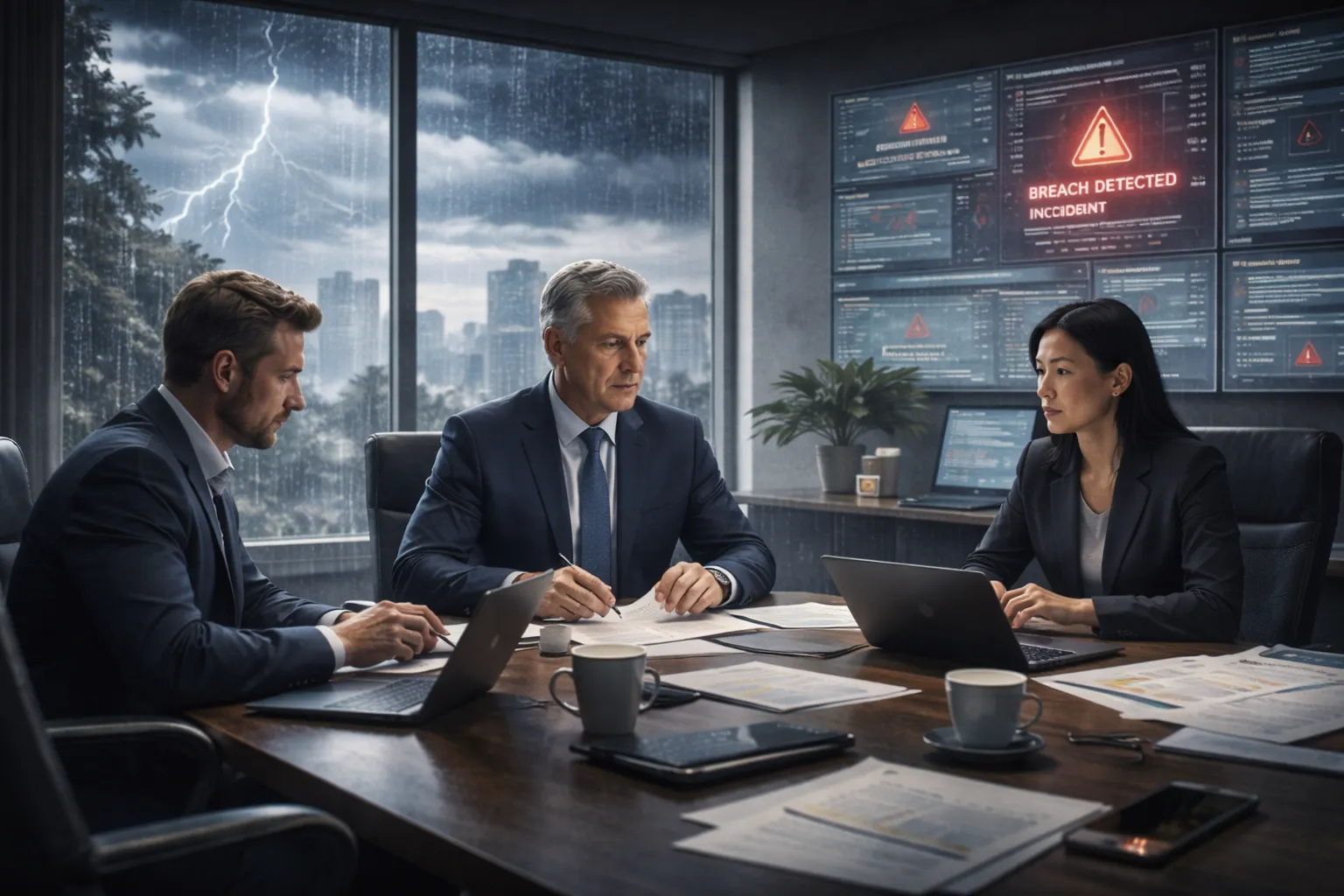
Why Some Firms Stay Calm During Cyber Incidents
Key Takeaways
When a cyber incident happens, the technical details matter — but they’re rarely what determine the outcome.
When a cyber incident happens, the technical details matter — but they’re rarely what determine the outcome.
What determines the outcome is how the firm responds in the first moments.
Some organizations panic. Others move deliberately, communicate clearly, and stay in control — even when the facts are still emerging.
That difference isn’t personality. It’s preparation.
Calm Is a Signal, Not a Mood
In the middle of an incident, teams take their cues from leadership.
If leaders appear uncertain, reactive, or scattered, that uncertainty spreads instantly:
- Decisions slow down
- Messages conflict
- Documentation falls behind
- Confidence erodes
Calm leadership, on the other hand, creates space:
- Space to assess
- Space to prioritize
- Space to make defensible decisions
The firms that stay calm aren’t minimizing risk. They’ve already decided how they will operate under pressure.
Why Panic Is So Expensive
Panic doesn’t just feel bad — it creates real, measurable damage.
In cyber incidents, panic often leads to:
- Multiple people acting independently
- Systems being changed without coordination
- Incomplete or conflicting communications
- Poorly documented decisions
Those mistakes become liabilities later — during regulatory inquiries, investor discussions, or legal review.
Ironically, the technical incident may be contained quickly, while the operational fallout lasts much longer.
The Firms That Stay Calm Have Decided in Advance
Calm firms don’t improvise during incidents. They execute.
Before anything happens, they’ve already answered questions like:
- Who leads response decisions?
- Who communicates internally? Externally?
- What gets documented, and by whom?
- When does leadership get briefed — and how?
Because those answers exist, the incident doesn’t create chaos. It triggers a process.
The First 15 Minutes Matter Most
In almost every incident, the first 15 minutes determine the tone of everything that follows.
This is when firms either:
- Establish clarity or
- Lose it
Strong firms use those first minutes to:
- Confirm facts, not speculate
- Assign roles, not debate them
- Contain risk, not overreact
Weak firms rush to action without coordination — disabling systems, notifying people prematurely, or escalating before understanding scope.
Speed without structure creates noise. Structure creates speed where it matters.
Preparation Isn’t a Binder — It’s Muscle Memory
Many firms technically have incident response plans.
Very few have rehearsed them.
Plans that haven’t been exercised tend to fail in predictable ways:
- People don’t know their role
- Escalation paths aren’t clear
- Documentation is forgotten
- Leadership involvement is delayed
Firms that stay calm treat preparation like rehearsal, not paperwork.
They run tabletop exercises. They talk through uncomfortable scenarios. They pressure-test assumptions.
Not because they expect disaster — but because they expect uncertainty.
Calm Firms Separate Technical Response From Leadership Oversight
Another key difference is role clarity.
In calm firms:
- Technical teams focus on containment and analysis
- Leadership focuses on decisions, communication, and risk tolerance
In panicked firms, leadership gets pulled into technical details — while no one is clearly managing the overall response.
That role confusion creates bottlenecks at exactly the wrong time.
Strong firms respect the separation:
- Experts handle execution
- Leaders handle accountability
Communication Is a Control, Not an Afterthought
During incidents, silence creates fear — but uncontrolled communication creates exposure.
Calm firms understand this.
They:
- Designate a single source of truth
- Control internal messaging
- Avoid speculation
- Document what is known, what is unknown, and what is next
This discipline protects credibility — especially with investors, regulators, and partners.
Poor communication, even during minor incidents, can do more reputational damage than the incident itself.
Why Calm Signals Maturity to Outsiders
Investors, regulators, and counterparties don’t expect firms to be immune to incidents.
They expect firms to be predictable under stress.
A firm that responds calmly signals:
- Strong governance
- Clear leadership
- Disciplined operations
That perception matters.
It affects:
- Investor confidence
- Regulatory posture
- Long-term trust
Calm doesn’t hide risk. It demonstrates control.
What Calm Actually Looks Like in Practice
In firms that manage incidents well, you’ll see:
- Fewer people involved — but more clearly involved
- Slower initial action — but faster resolution
- Fewer emails — but better documentation
- Fewer opinions — but clearer decisions
Nothing flashy. Nothing dramatic.
Just steady execution.
The Real Advantage of Preparation
The biggest advantage of preparation isn’t technical resilience.
It’s leadership clarity.
When leaders know:
- What they are responsible for
- What decisions they need to make
- What information they should expect
They don’t panic.
And when leadership doesn’t panic, the organization doesn’t either.
Final Thought
The firms that stay calm during cyber incidents aren’t lucky. They’re intentional.
They’ve decided in advance how they will behave when things are unclear, incomplete, and uncomfortable.
That decision — more than any tool or technology — is what turns a stressful event into a controlled one.
Calm is not accidental. It’s designed.