
What Regulators Expect — And Why Most Firms Misinterpret It
Key Takeaways
"When firms talk about regulators and cybersecurity, the conversation often sounds the same:"
When firms talk about regulators and cybersecurity, the conversation often sounds the same:
“They expect enterprise-grade security.” “They want best-in-class tools.” “They expect zero issues.”
That belief drives a lot of unnecessary anxiety — and, ironically, a lot of misplaced effort.
Because in practice, most regulatory findings don’t stem from missing technology. They stem from missing clarity.
The Core Misunderstanding
Regulators are not evaluating whether your firm looks impressive on paper. They are evaluating whether your firm is operating deliberately.
That distinction matters.
A sophisticated environment with unclear ownership will raise more concern than a modest environment that is well understood, consistently managed, and well documented.
Regulators are not asking:
- “Is this firm perfect?”
They are asking:
- “Does this firm understand its risk, and does leadership own it?”
What Regulators Are Actually Looking For
Across examinations, the same themes appear again and again.
Regulators want to see:
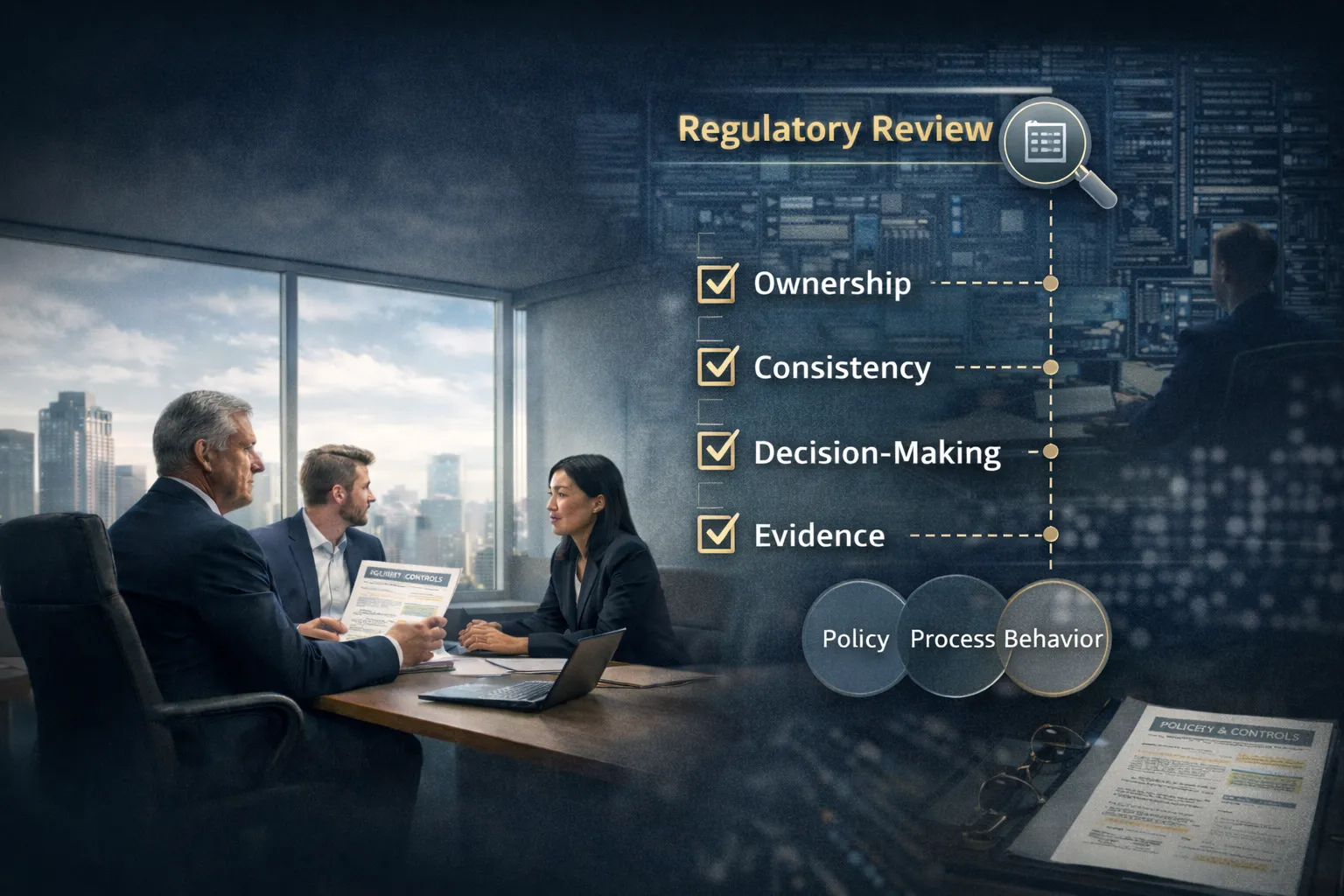
- Clear ownership Who is responsible for cybersecurity decisions? Not in theory — in practice.
- Reasonable decision-making Why were certain controls chosen? Why were others deferred?
- Consistency Are policies followed, or do they exist only to satisfy an audit?
- Evidence Can the firm demonstrate that reviews, approvals, and controls actually occur?
Notice what’s missing from that list: specific brands, advanced tools, or technical perfection.
Why “Best Practices” Isn’t Enough
Many firms lean on the phrase “industry best practices” as a form of reassurance.
The problem is that regulators can’t evaluate intent — only behavior.
Saying you follow best practices doesn’t explain:
- How access is reviewed
- How vendors are evaluated
- How exceptions are handled
- How leadership stays informed
When those answers aren’t concrete, regulators are left to infer risk — and inference rarely benefits the firm.
Specificity builds credibility. Generalities invite scrutiny.
The Real Risk: Undocumented Judgment
Most regulatory exposure doesn’t come from making the wrong decision.
It comes from making reasonable decisions without documenting them.
Examples include:
- Accepting vendor risk without recording why
- Allowing temporary access that quietly becomes permanent
- Deviating from policy for operational reasons without capturing approval
When these decisions are undocumented, they appear arbitrary in hindsight — even if they were thoughtful at the time.
Documentation is not bureaucracy. It’s protection for leadership.
Policies vs. Practice vs. Reality
A written policy is only one layer of control.
Regulators care about alignment across three layers:
- What the policy says
- What the process actually does
- What people really do under pressure
Gaps between these layers are where findings emerge.
A policy that isn’t followed consistently is more concerning than no policy at all — because it signals loss of control.
Why Consistency Matters More Than Sophistication
Regulators understand that firms vary in size, resources, and complexity.
What they don’t excuse is inconsistency.
If one access review is thorough and the next is informal… If one vendor assessment is documented and the next is verbal… If controls exist but aren’t revisited…
Those patterns suggest risk is managed opportunistically, not deliberately.
Consistency signals maturity.
How Prepared Firms Approach Examinations
Firms that navigate examinations smoothly tend to share a few traits:
- Leadership understands their role in cybersecurity oversight
- Decisions are documented, even when imperfect
- Controls are reviewed on a schedule, not in reaction to exams
- Teams can explain why things are done, not just what is done
They don’t scramble to look compliant. They operate in a way that is compliant by default.
A Better Mental Model for Regulation
Rather than viewing regulators as auditors searching for failure, strong firms view them as evaluators of discipline.
The question isn’t: “Will they find something wrong?”
It’s: “Can we clearly explain how we manage risk — calmly, consistently, and without defensiveness?”
When the answer is yes, examinations become conversations instead of confrontations.
Final Thought
Most firms misinterpret regulatory expectations because they overestimate complexity and underestimate discipline.
Regulators aren’t looking for perfection. They’re looking for evidence of thoughtful control.
Clarity beats sophistication. Consistency beats ambition. And documented judgment protects everyone involved.