
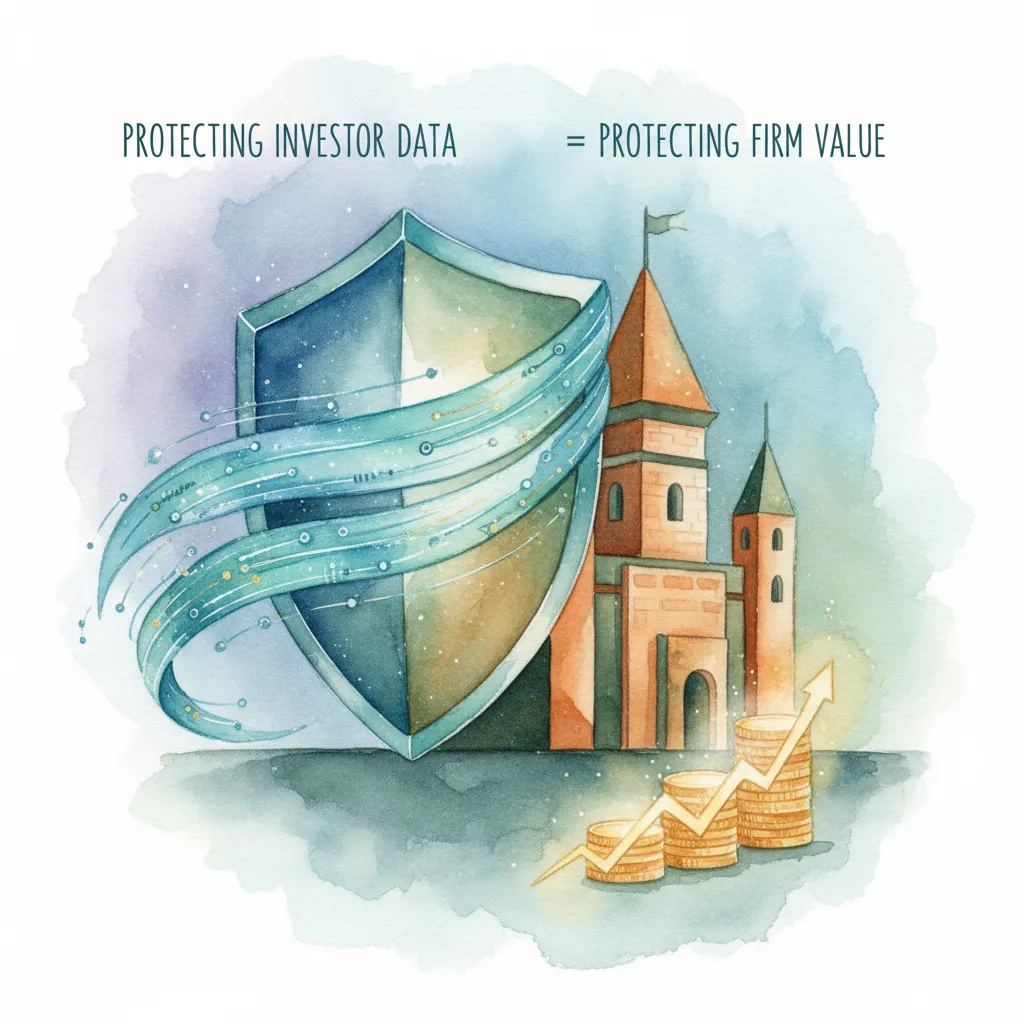
Protecting Investor Data = Protecting Firm Value
Key Takeaways
In today’s world, data is among the most sensitive assets any alternative asset manager holds. Our clients entrust us not just with their capital, but with
In today’s world, data is among the most sensitive assets any alternative asset manager holds. Our clients entrust us not just with their capital, but with personal details, financial histories, and strategic plans. When we fail to protect that trust, we erode not only the investor relationship, but also the very value and reputation of the firm. Safeguarding investor data is therefore not just a compliance checkbox—it is a fiduciary duty and a competitive differentiator.
The Fiduciary Imperative
For registered investment advisers and many alternative asset firms, the duty to protect client data flows naturally from the broader fiduciary obligation of care and loyalty. That duty demands that we act in the best interest of our clients—not only in portfolio construction, but in operational risk management. Loss or misuse of sensitive data can lead to financial loss, identity theft, reputational harm, and regulatory sanctions. All of these undermine our clients’ interests and thus breach our fiduciary duty.
When a firm treats investor data as an afterthought, it risks regulatory scrutiny and enforcement action. In contrast, taking proactive steps demonstrates that you take the fiduciary duty seriously.
A Business Differentiator — Trust as a Growth Engine
In the alternative asset space, differentiation is tough. Pricing, strategies, and track records often converge. What does stand out is trust—especially in a time where high-profile data breaches hit financial institutions regularly. The firms that transparently and credibly show they safeguard investor data stand head and shoulders above those that don’t.
Here’s how protecting data becomes a brand and business advantage:
- Reassurance to sophisticated investors Institutional allocators (e.g. pension funds, endowments, family offices) carry significant legal and reputational risk. A manager who can articulate and evidence robust data safeguards gives them comfort. That becomes a decision factor—not just about returns, but risk control.
- Reduced client friction Clients often request security audits, vendor risk questionnaires, and operational due diligence. Firms with documented policies, third-party certifications, and audit reports respond more quickly and favorably, causing less burden to prospective investors.
- Defense in crisis Suppose an incident happens (and it might). A firm with clear policies, incident playbooks, and documented actions can respond transparently and credibly—limiting reputational and regulatory damage.
- Marketing and differentiation Being known as a “fiduciary-first, security-first” firm can become a marketing message. Over time, this reputation attracts clients who value operational rigor, not just performance.
Practical Ways to Demonstrate Accountability
Below are tangible, non-techy practices you can implement—and highlight to investors—to show you take data protection seriously:
| Practice | What It Looks Like in Action | How to Communicate |
|---|---|---|
| Written policies & procedures | A published set of rules governing how client data is collected, stored, accessed, and destroyed | Share a summary or redacted version in due diligence materials |
| Formal incident response plan | A “playbook” that describes steps to detect, contain, assess, notify, and recover from a breach | Mention in your investor handbook or offering documents |
| Third-party oversight | Due diligence, audits, and monitoring of service providers who handle data (e.g., fund administrators, custodians) | Include service-provider risk summaries in your disclosure materials |
| Periodic risk assessments | Annual reviews evaluating potential vulnerabilities (e.g., employee errors, phishing, social engineering) | Report on outcomes and action plans to investors |
| Access and role reviews | Periodic checks of who has access to which data, and removing privileges when no longer needed | Give high-level numbers (e.g. “only 3 people have access to LP identity details”) |
| Training and accountability | All employees (and any contractors) receive training on data stewardship and consequences for lapses | Share training completion rates or summaries |
| Data retention and disposal policies | Define how long data is held, and how it is securely destroyed when no longer needed | Include in your privacy policies or investor terms |
| Evidence and recordkeeping | Log actions taken, decisions made, investigations run, and lessons learned | Make summaries or executive dashboards available to governance committees or key LPs |
These practices create a feedback loop: you learn from assessments, tighten controls, and earn credibility with clients.
Final Thoughts
Protecting investor data is not a back-office burden or a compliance afterthought—it is central to fulfilling your fiduciary duty and preserving firm value. In an environment of heightened regulatory expectations from the SEC and FINRA, failing to show discipline in this area exposes your firm to sanctions. But more importantly, it erodes the core trust on which alternative asset managers depend.
By embedding accountability into your culture—through written policies, oversight, transparent communication, and continuous improvement—you create a defensible moat. You not only meet regulatory expectations but earn a competitive edge in a world where trust is scarce and priceless.
If you like, I can help you turn this into a slide deck or investor-friendly summary, or map it to specific D&O or cyber insurance language.