

How Much Does Managed IT Services Cost for a Hedge Fund or Private Equity Firm?
Key Takeaways
"Direct answer: Managed IT services for hedge funds, private equity firms, and other investment managers typically cost $300 to $450 per user per month. For a" How Much Does Managed IT Services Cost for a Hedge Fund or Private Equity Firm?
Direct answer: Managed IT services for hedge funds, private equity firms, and other investment managers typically cost $300 to $450 per user per month. For a 25-person investment firm, that usually translates to $7,500 to $11,250 per month for fully managed IT, cybersecurity monitoring, compliance support, and white-glove help desk.
Firms operating under SEC or FINRA oversight often require additional security layers such as endpoint detection, SIEM monitoring, compliance documentation, phishing protection, and secure cloud controls. Those requirements can increase total monthly cost, but they also reduce risk and improve audit readiness.
This guide explains managed IT pricing for hedge funds, managed IT pricing for private equity firms, and what investment managers should expect to receive from a qualified managed service provider.
Quick Managed IT Cost Summary for Investment Firms
- Typical cost per user: $300 to $450 per month
- Typical client size: 10 to 100 employees
- Main pricing drivers: compliance, cybersecurity stack, cloud complexity, and support level
- Common industries served: hedge funds, private equity firms, RIAs, family offices, and other investment managers
The 5 Factors That Determine Managed IT Costs for Investment Firms
1. Firm Size
Most managed IT providers charge on a per-user basis, so headcount directly affects monthly spend. Investment firms with 10 to 100 employees are the most common range, but smaller firms still often require enterprise-grade security and support.
2. Compliance Requirements
SEC oversight, FINRA obligations, investor due diligence, and SOC 2 readiness can all increase the level of documentation, policy enforcement, and control monitoring required from your IT partner.
3. Cybersecurity Stack
Financial firms often need layered cybersecurity tools such as EDR, SIEM, MDR, phishing protection, log monitoring, vulnerability management, incident response support, and secure email controls.
4. Cloud Infrastructure
A firm operating in Microsoft 365 alone will usually have lower infrastructure complexity than one using Azure, AWS, secure virtual desktops, or specialized financial applications that require tighter access control and uptime planning.
5. Support Level
White-glove support is often essential for hedge funds and private equity firms. Executives, deal teams, investor relations professionals, and finance teams usually expect fast, high-touch support with minimal disruption.
Typical IT Budget Benchmarks for Financial Firms
| Firm Size | Monthly IT Cost | Annual IT Budget |
|---|---|---|
| 10 employees | $3,000 to $4,500 | $36,000 to $54,000 |
| 25 employees | $7,500 to $11,250 | $90,000 to $135,000 |
| 50 employees | $15,000 to $22,500 | $180,000 to $270,000 |
| 100 employees | $30,000 to $45,000 | $360,000 to $540,000 |
These benchmarks reflect firms seeking fully managed IT with proactive support, cybersecurity monitoring, compliance-aware processes, and secure cloud oversight rather than low-cost break-fix services.
What Should Be Included in Managed IT for Investment Firms
Managed IT for financial firms should typically include:
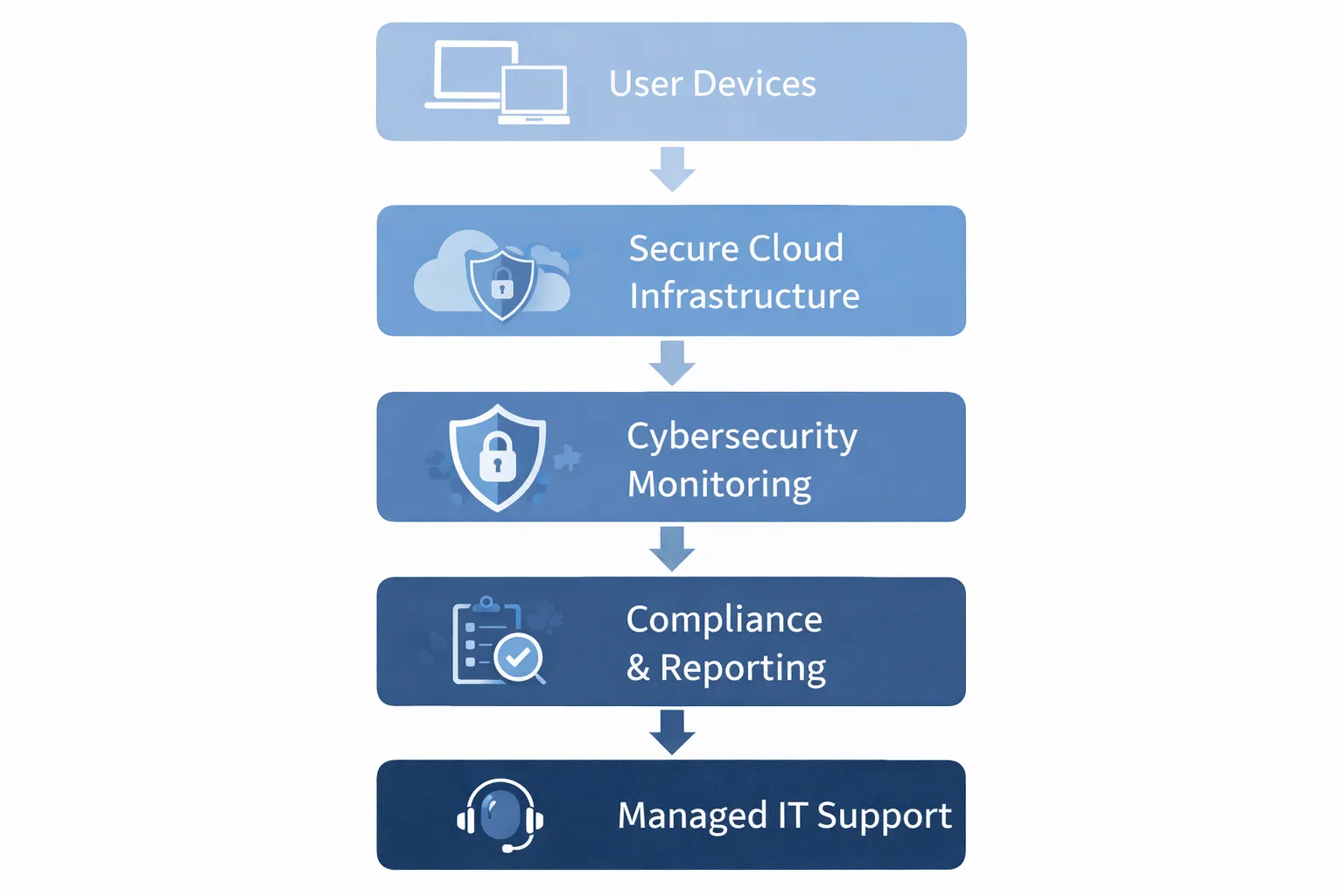
- 24/7 cybersecurity monitoring
- Compliance-ready security controls
- Secure cloud infrastructure
- White-glove help desk
- Backup and disaster recovery
- Vendor management
- Secure remote access
When comparing providers, make sure you are comparing scope, not just price. A lower-cost proposal often excludes key services that regulated firms eventually need.
Why Financial Firms Pay More Than Other Industries
Regulatory Compliance Requirements
Hedge funds, private equity firms, RIAs, and other investment managers often need stronger oversight, better documentation, and clearer security policies than firms in lower-risk industries.
Higher Cybersecurity Risk
Financial firms are frequent targets for business email compromise, ransomware, credential theft, and data exfiltration because they handle sensitive communications and valuable financial information.
Sensitive Investor Data
Investor records, deal materials, financial statements, and confidential internal data require tighter access control, monitoring, and retention practices.
Rapid Uptime Expectations
Downtime can affect reporting, transactions, fundraising activity, executive productivity, and time-sensitive operations. That increases the need for resilient infrastructure and responsive support.
White-Glove Support Expectations
Senior professionals at investment firms generally expect faster resolution times and a more polished support experience than a standard SMB help desk model provides.
Questions Hedge Funds and Private Equity Firms Should Ask Before Choosing an MSP
- Do you support SEC cybersecurity rule requirements?
- What security stack do you deploy for investment firms?
- Do you provide audit-ready documentation?
- What is your average support response time?
- How do you handle backup validation and disaster recovery testing?
- Do you support secure Azure or AWS environments for financial firms?
Real Client Example: 40-Person Private Equity Firm
One 40-person private equity firm came to Triada after outgrowing a fragmented vendor model. The firm had been paying $18,000 per month across multiple providers without clear ownership of security, support, or compliance coordination.
After consolidating their environment, the firm:
- Migrated to a secure Azure cloud environment
- Implemented 24/7 MDR and compliance monitoring
- Reduced downtime by 85%
- Passed an SEC cybersecurity audit
The biggest improvement was not just cost visibility. It was having a single accountable managed IT partner for infrastructure, cybersecurity, compliance support, and day-to-day user experience.
Why Firms Choose Triada Networks
Investment firms need more than general IT support. They need a partner that understands financial services operations, cybersecurity risk, regulatory expectations, and the importance of responsive support.
- 17 years serving financial services firms
- 30 years of combined SEC / FINRA experience
- CISSP-certified cybersecurity leadership
- Over 20 financial services firms supported
Triada supports hedge funds, private equity firms, and other investment managers with secure infrastructure, compliance-aware cybersecurity controls, and white-glove help desk support tailored to financial services.
Managed IT Cost Comparison: General MSP vs Financial Services MSP
A general managed service provider may offer lower pricing, but many do not include the depth of cybersecurity controls, compliance support, or executive-level responsiveness required by financial firms.
| Service Area | General MSP | Financial Services MSP |
|---|---|---|
| Cybersecurity Monitoring | Basic or limited | 24/7 layered monitoring |
| Compliance Awareness | Often minimal | SEC / FINRA aligned support |
| Documentation | Inconsistent | Audit-ready processes |
| Support Experience | Standard help desk | White-glove support |
| Cloud Security Design | Generic | Secure financial environments |
Frequently Asked Questions About Managed IT Costs for Financial Firms
How much does managed IT cost for a 25-person hedge fund?
A 25-person hedge fund will typically spend between $7,500 and $11,250 per month, depending on security requirements, support model, and infrastructure complexity.
What is included in managed IT for a private equity firm?
Managed IT for private equity firms usually includes user support, device management, cybersecurity monitoring, compliance-oriented controls, vendor coordination, backup, disaster recovery, and cloud administration.
Is managed IT worth it for a small investment firm?
For many small investment firms, managed IT is more cost-effective than building an internal team because it provides access to cybersecurity expertise, structured support, compliance awareness, and scalable infrastructure without hiring multiple full-time specialists.
Final Takeaway
Managed IT for hedge funds, private equity firms, and investment managers usually costs $300 to $450 per user per month. That higher range reflects the security, compliance, uptime, and support demands of financial services.
The right managed IT provider should do more than resolve tickets. They should reduce risk, improve resilience, support compliance readiness, and give your team confidence that technology is being managed proactively.
Related Financial Services IT Resources
Frequently Asked Questions About Managed IT Costs for Financial Firms
How much does managed IT cost for a hedge fund?
Managed IT for a hedge fund typically costs between $300 and $450 per user per month. The exact cost depends on cybersecurity requirements, compliance obligations, cloud infrastructure, and the level of support provided by the managed service provider.
How much does managed IT cost for a private equity firm?
Private equity firms typically spend $7,500 to $11,250 per month for a 25-person team when using a fully managed IT provider. Larger firms or firms with more advanced cybersecurity requirements may have higher monthly costs.
Why do financial firms usually pay more for managed IT?
Financial firms typically pay more for managed IT because they require stronger cybersecurity protections, compliance-ready documentation, secure cloud environments, and faster support response times. Hedge funds and private equity firms also manage sensitive investor data, which requires additional security controls.
What services should be included in managed IT for an investment firm?
Managed IT for investment firms should include cybersecurity monitoring, secure cloud infrastructure management, white-glove help desk support, backup and disaster recovery, vendor management, compliance-ready security controls, and secure remote access for employees.
Is managed IT worth it for small investment firms?
For most small investment firms, managed IT is more cost-effective than hiring an internal IT team. A managed provider gives the firm access to cybersecurity expertise, compliance awareness, proactive monitoring, and responsive support without the cost of multiple full-time specialists.